
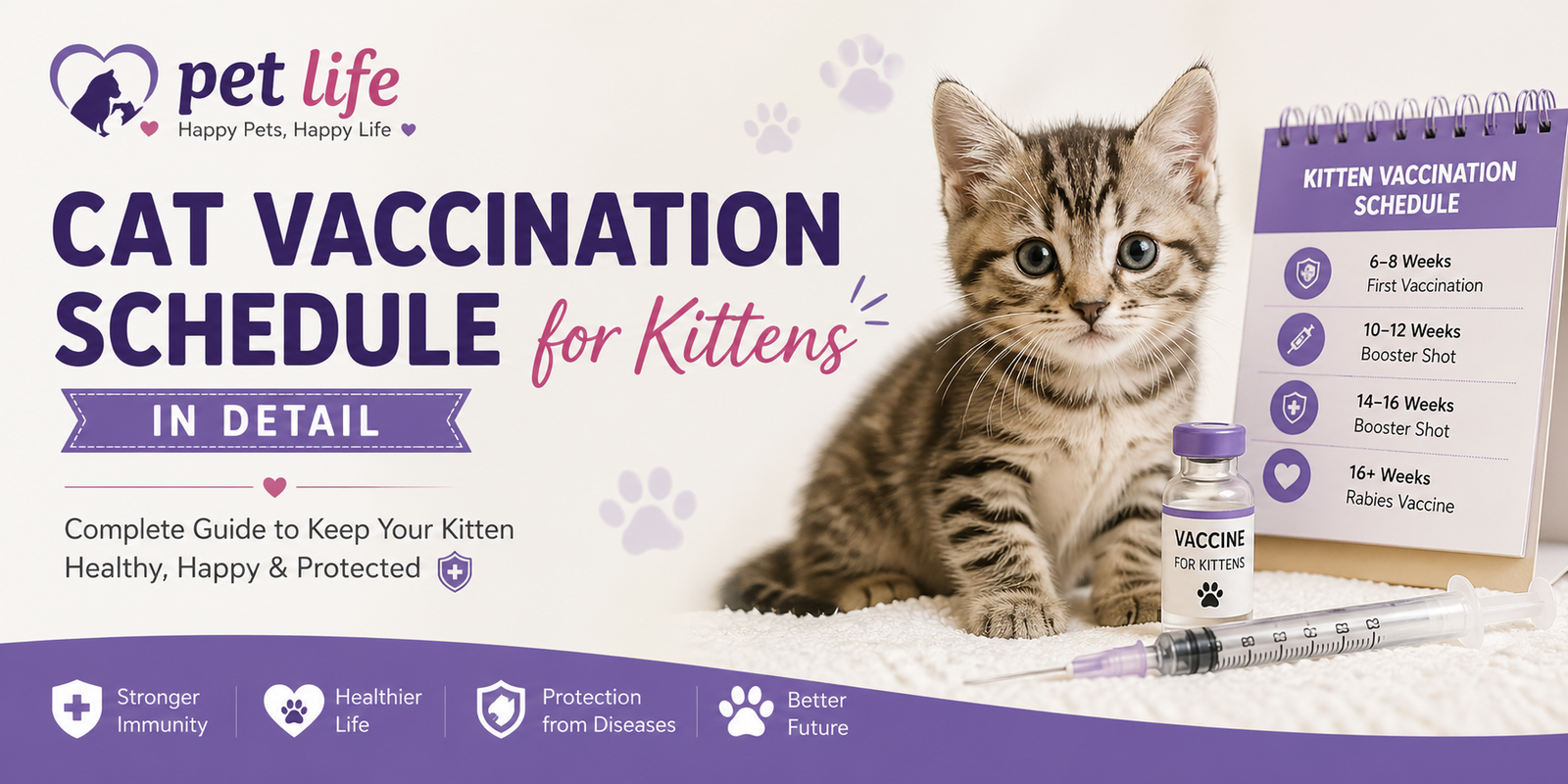
Bringing home a new kitten is an exciting experience, but ensuring their health should be your top priority. One of the most important steps in protecting your furry friend is following the cat vaccination schedule for kittens in detail. Vaccinations help prevent serious diseases and give your kitten a strong foundation for a healthy life. At Pet Life, we believe that informed pet owners raise healthier pets, so here’s a complete guide to help you understand everything you need to know.
Why Vaccinations Are Important for Kittens
Kittens are born with some immunity from their mother’s milk, but this protection fades within a few weeks. Without vaccinations, they become vulnerable to dangerous and sometimes fatal diseases. Vaccines train your kitten’s immune system to recognize and fight infections effectively.
Core Vaccines for Kittens
Core vaccines are essential for all kittens, regardless of their lifestyle. These protect against highly contagious and life-threatening diseases:
- Feline Panleukopenia (FPV) – A severe viral disease affecting the digestive system
- Feline Herpesvirus (FHV-1) – Causes respiratory infections
- Feline Calicivirus (FCV) – Leads to respiratory issues and mouth ulcers
- Rabies – A fatal disease that can spread to humans
Non-Core Vaccines
Non-core vaccines are recommended based on your kitten’s environment and risk factors:
- Feline Leukemia Virus (FeLV) – Important for kittens that go outdoors or live with other cats
- Chlamydia – For multi-cat households or high-risk environments
- Bordetella – Recommended in certain situations like shelters
Cat Vaccination Schedule for Kittens in Detail
Here’s a typical vaccination timeline:
6–8 Weeks Old
- First dose of FVRCP vaccine (protects against FPV, FHV-1, FCV)
10–12 Weeks Old
- Second dose of FVRCP
- First FeLV vaccine (if recommended)
14–16 Weeks Old
- Third dose of FVRCP
- Second FeLV vaccine
- First Rabies vaccine
1 Year Old
- Booster shots for FVRCP, Rabies, and FeLV
Booster Vaccinations
After the first year, your cat will need regular booster shots to maintain immunity:
- FVRCP: Every 1–3 years
- Rabies: Every 1–3 years (depending on local laws)
- FeLV: Annually if at risk
Tips for a Smooth Vaccination Process
- Schedule vet visits in advance
- Keep your kitten calm and comfortable
- Monitor for mild side effects like sleepiness or slight fever
- Always follow your veterinarian’s advice
Common Side Effects
Most vaccines are safe, but mild reactions may occur:
- Temporary lethargy
- Slight swelling at the injection site
- Low-grade fever
Severe reactions are rare but require immediate veterinary attention.
Final Thoughts
Following the cat vaccination schedule for kittens in detail is essential for protecting your pet from preventable diseases. Staying consistent with vaccinations ensures your kitten grows into a healthy and happy cat.
At Pet Life, we encourage all pet owners to work closely with their veterinarian and never skip important vaccines. A little care today can save your kitten from serious health issues in the future.