
By Pet Life
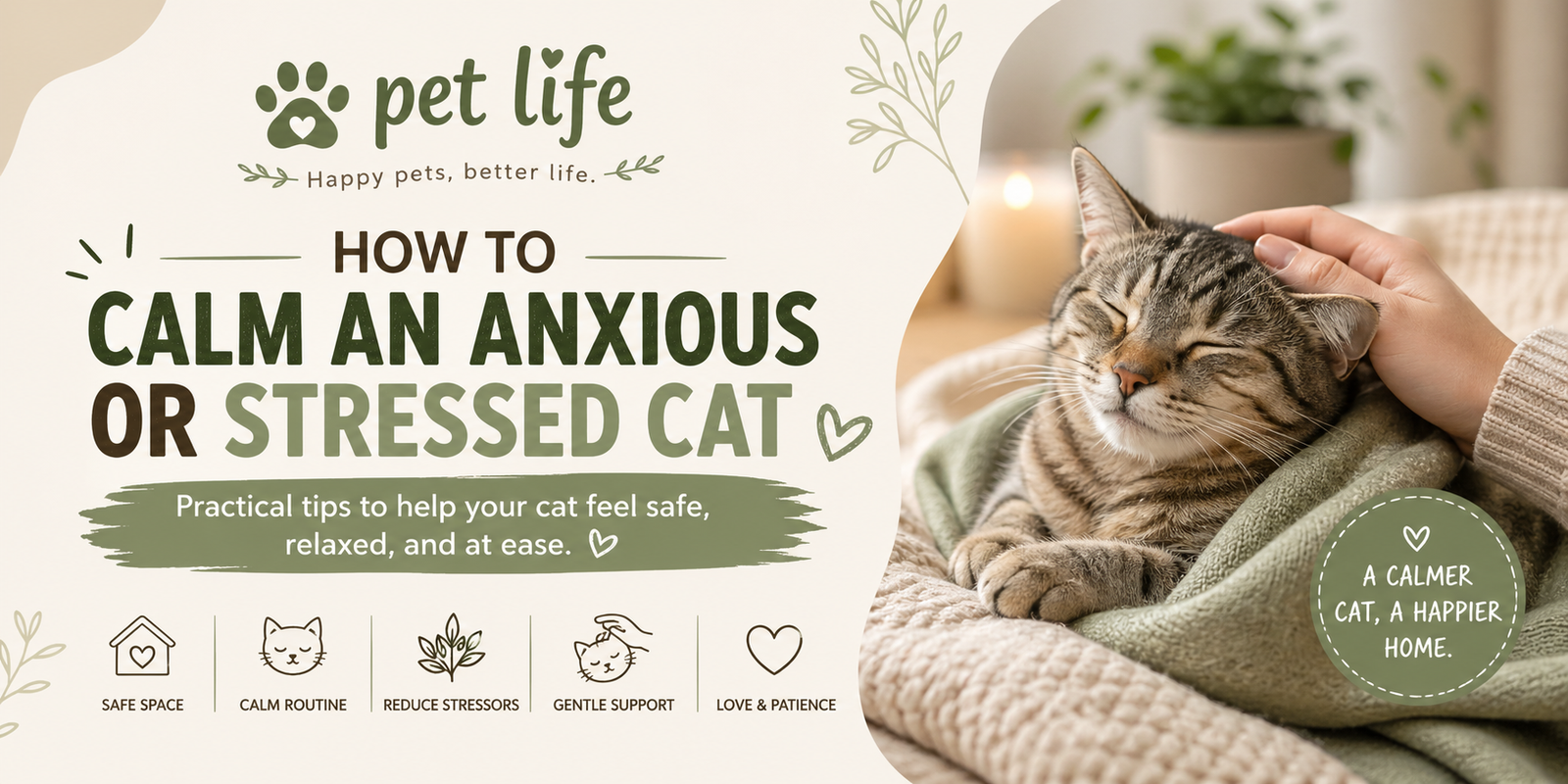
Cats may appear calm and independent, but they can easily become anxious or stressed due to changes in their environment, routine, or health. Understanding how to calm an anxious or stressed cat is essential for every pet owner who wants a happy and healthy feline companion.
In this guide by Pet Life, you’ll discover practical, safe, and effective ways to reduce your cat’s stress and create a peaceful home environment.
Common Signs of Stress in Cats
Before learning how to help, it’s important to recognize when your cat is stressed. Some common signs include:
- Hiding more than usual
- Excessive grooming or hair loss
- Aggressive or withdrawn behavior
- Loss of appetite
- Loud or frequent meowing
- Avoiding the litter box
If you notice these behaviors, your cat may be experiencing anxiety or stress.
What Causes Stress in Cats?
Understanding the cause is key when learning how to calm an anxious or stressed cat. Common triggers include:
- Moving to a new home
- Loud noises (fireworks, construction)
- New pets or people
- Changes in routine
- Lack of stimulation or boredom
- Health issues
Effective Ways to Calm an Anxious or Stressed Cat
1. Create a Safe and Quiet Space
Cats need a secure place where they can relax. Set up a quiet corner with:
- A cozy bed
- Favorite toys
- Minimal noise and disturbance
This helps your cat feel protected and in control.
2. Stick to a Routine
Cats love consistency. Feeding, playtime, and sleep should happen at the same time daily. A predictable routine reduces anxiety and builds trust.
3. Use Gentle Interaction
Avoid forcing your cat to interact when stressed. Instead:
- Speak softly
- Move slowly
- Let your cat approach you
This builds comfort and reduces fear.
4. Provide Mental and Physical Stimulation
Interactive play helps release stress and boosts mood. Try:
- Feather toys
- Laser pointers
- Puzzle feeders
Daily play sessions can significantly improve your cat’s emotional well-being.
5. Use Calming Products
There are many products designed to ease anxiety in cats, such as:
- Pheromone diffusers
- Calming sprays
- Soft calming music
These can mimic natural comfort signals and reduce stress levels.
6. Maintain a Clean Environment
Cats are very sensitive to cleanliness. Ensure:
- The litter box is clean
- Food and water bowls are fresh
- Living spaces are tidy
A clean environment reduces stress and promotes comfort.
7. Give Your Cat Space
Sometimes the best way to calm your cat is to simply leave them alone. Allow them time to adjust and relax at their own pace.
8. Visit a Veterinarian if Needed
If stress continues or worsens, consult a vet. Underlying health issues may be causing anxiety, and professional advice is important.
Long-Term Tips for a Happy Cat
To prevent stress in the future:
- Introduce changes gradually
- Provide scratching posts and climbing areas
- Ensure regular playtime
- Keep a stable daily routine
Consistency and care are key when learning how to calm an anxious or stressed cat.
Conclusion
Knowing how to calm an anxious or stressed cat can make a huge difference in your pet’s life. With patience, understanding, and the right approach, you can help your cat feel safe, relaxed, and happy.
At Pet Life, we believe every cat deserves a peaceful and loving home. Start applying these simple tips today and watch your feline companion thrive.