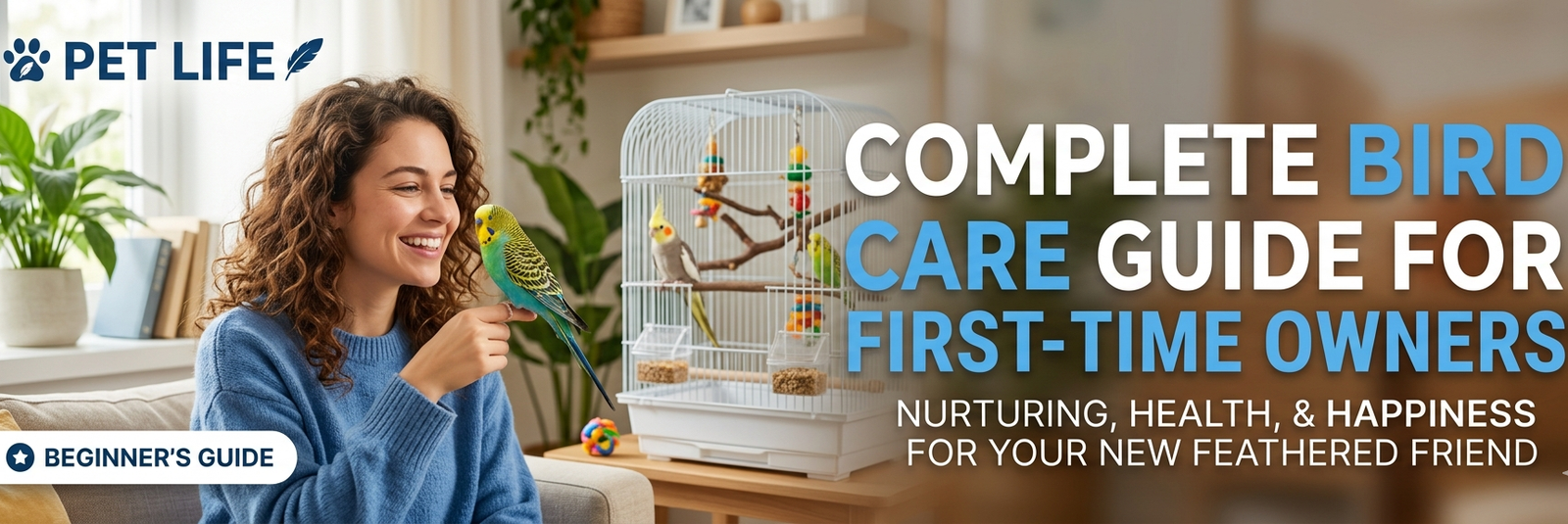
Bringing a bird into your home is an incredibly rewarding experience. These intelligent, social creatures offer unique companionship, but they also require a specialized level of care compared to traditional four-legged pets. If you are preparing to welcome your first feathered friend, this guide from Pet Life will help you establish a healthy and happy environment.
1. Choosing the Right Habitat
The cage is your bird’s sanctuary. The golden rule for bird housing is: go as large as your space and budget allow.
- Width Over Height: Most birds fly horizontally, so a wide cage is generally better than a tall, narrow one.
- Bar Spacing: Ensure the bars are close enough together that your bird cannot get its head stuck, but sturdy enough to prevent bending.
- Placement: Keep the cage in a social area of the house, away from direct sunlight, drafty windows, and kitchen fumes (which can be toxic).
2. Nutrition and Diet
A common mistake for first-time owners is providing a seed-only diet. While birds love seeds, they are often high in fat and low in essential nutrients.
- High-Quality Pellets: These should make up about 60–70% of their diet.
- Fresh Produce: Offer daily servings of leafy greens, carrots, and apples (remove all seeds and pits).
- Fresh Water: Change the water at least once daily. If the bowl is soiled, clean it immediately.
3. Enrichment and Mental Stimulation
Birds are highly intelligent and can become bored or stressed without activity. Pet Life recommends a variety of “foraging” toys to keep them engaged.
- Toys: Rotate toys weekly to keep things fresh. Include chewable wood, bells, and shreddable paper.
- Perches: Use perches of varying diameters and textures (like natural wood) to prevent foot problems like bumblefoot.
- Out-of-Cage Time: Your bird needs several hours of supervised time outside the cage daily to stretch their wings and bond with you.
4. Hygiene and Health
Maintaining a clean environment is the best way to prevent illness.
- Daily Cleaning: Replace cage liners and wash food/water bowls.
- Weekly Cleaning: Scrub the entire cage and perches with bird-safe disinfectant.
- Grooming: Most birds enjoy a shallow misting of water or a bird bath to keep their feathers in top condition.
5. Safety Warnings
Birds have highly sensitive respiratory systems. To keep your pet safe, avoid using the following in your home:
- Teflon or non-stick cookware (fumes are fatal to birds).
- Scented candles, incense, or aerosol sprays.
- Toxic foods like chocolate, avocado, caffeine, and onions.