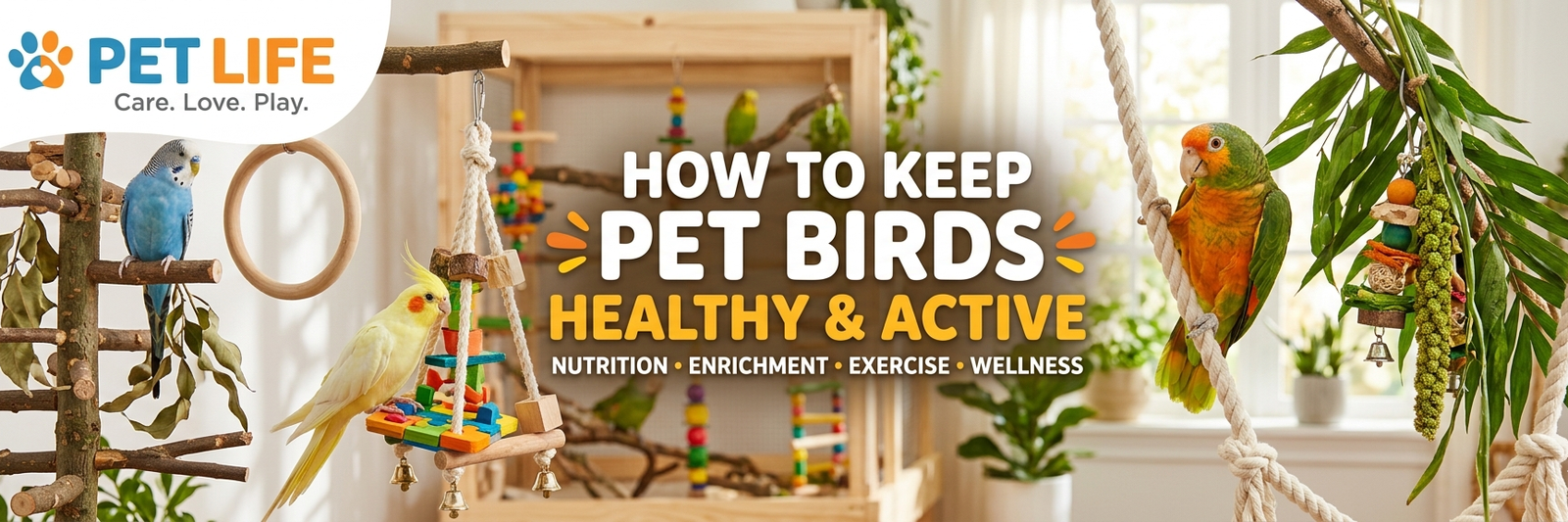
Owning a bird is a rewarding experience, but these intelligent, high-energy creatures require more than just a cage and some seed to truly thrive. At Pet Life, we believe every feathered friend deserves a life full of vitality.
If you want to ensure your avian companion lives a long, chirpy life, here is our comprehensive guide on how to keep pet birds healthy and active.
1. Nutrition Beyond the Seed Bowl
Many owners make the mistake of providing an all-seed diet. While birds love seeds, they are often high in fat and low in essential vitamins.
- High-Quality Pellets: These should form the base of the diet, ensuring balanced nutrition.
- Fresh Produce: Offer daily servings of leafy greens (kale, spinach), carrots, and occasional fruits like apples or berries.
- Hydration: Ensure fresh, filtered water is available at all times. Change it daily to prevent bacterial growth.
2. Physical Exercise and Flight
Birds are built for movement. To maintain muscle tone and cardiovascular health, they need space to stretch their wings.
- Safe Out-of-Cage Time: Allow your bird several hours a day in a “bird-proofed” room. Close all windows, turn off ceiling fans, and cover mirrors.
- Large Enclosures: Choose the largest cage your space allows. A cage should be wide enough for the bird to fly across, not just tall.
- Ladders and Swings: These encourage climbing and balance, keeping their feet and joints supple.
3. Mental Stimulation and Foraging
A bored bird is often an unhealthy bird. In the wild, birds spend most of their day foraging for food. You can mimic this at home to keep their minds sharp.
- Foraging Toys: Hide treats inside cardboard rolls or specialized puzzles. This forces them to “work” for their food, preventing behavioral issues like feather plucking.
- Rotation is Key: Don’t crowd the cage with toys. Instead, swap them out weekly to keep the environment feeling new and exciting.
4. Social Interaction
Birds are incredibly social animals. Whether they bond with a mate or with you, interaction is vital for their emotional well-being.
Pet Life Tip: Spend at least 30–60 minutes of focused time with your bird daily. Talk to them, whistle, or simply let them perch on your shoulder while you read.
5. Routine Health Checks
Prevention is the best medicine. Because birds instinctively hide signs of illness, regular monitoring is essential.
| Health Indicator | What to Look For |
| Feathers | Smooth, vibrant, and free of bald spots. |
| Droppings | Consistent color and texture; no sudden changes. |
| Energy | Alertness, clear eyes, and active vocalization. |
| Weight | Use a gram scale to track weight; sudden loss is a red flag. |
Summary
Learning how to keep pet birds healthy and active comes down to recreating a bit of the “wild” in your home. By prioritizing a varied diet, physical movement, and mental challenges, you are giving your pet the best quality of life possible.
For all your avian essentials—from premium pellets to engaging foraging toys—trust Pet Life to support your journey in bird ownership.