
By Pet Life
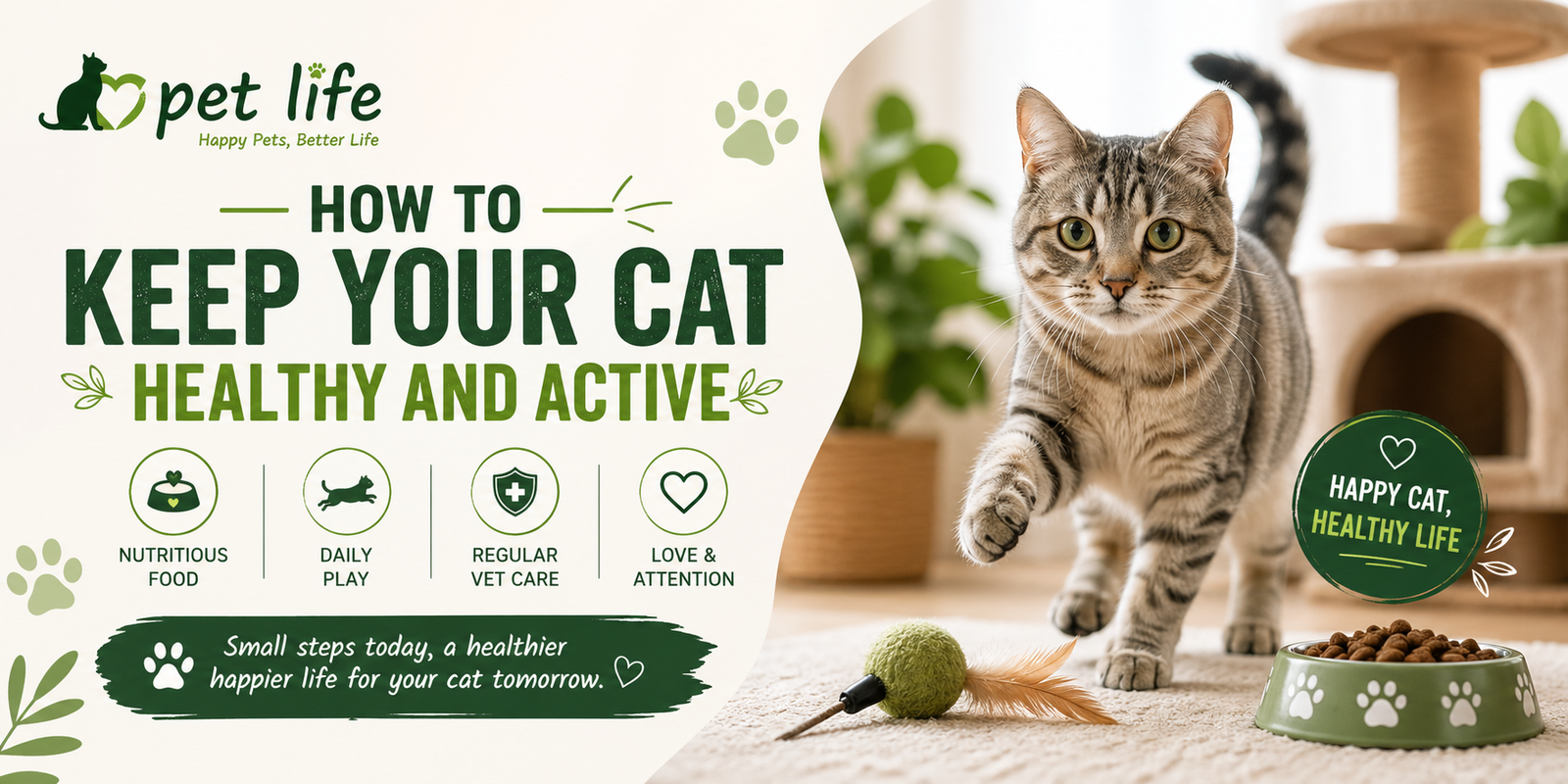
Keeping your cat healthy and active is essential for a long, happy life. Cats may seem independent, but they rely on proper care, nutrition, and stimulation to stay in top shape. Whether you’re a new cat owner or experienced, this complete guide by Pet Life will help you ensure your feline stays energetic and well.
1. Provide a Balanced Diet
Nutrition is the foundation of your cat’s health. Feed your cat high-quality food that includes essential nutrients like protein, vitamins, and minerals.
- Choose food based on your cat’s age (kitten, adult, senior)
- Avoid overfeeding to prevent obesity
- Always provide fresh, clean water
A proper diet helps maintain energy levels and prevents health issues.
2. Encourage Daily Exercise
Cats need regular physical activity to stay fit and avoid boredom.
- Use toys like feather wands and laser pointers
- Create climbing spaces like cat trees
- Play with your cat at least 15–20 minutes daily
Active cats are less likely to develop obesity and behavioral problems.
3. Schedule Regular Vet Checkups
Routine veterinary visits are crucial for early detection of health issues.
- Annual checkups for adult cats
- Vaccinations and parasite control
- Dental health monitoring
Preventive care ensures your cat stays healthy over time.
4. Maintain Proper Grooming
Grooming isn’t just about appearance—it’s vital for health.
- Brush your cat regularly to reduce shedding
- Trim nails to prevent injuries
- Keep ears and eyes clean
Long-haired cats may need more frequent grooming to avoid matting.
5. Keep Their Environment Stimulating
Mental stimulation is just as important as physical activity.
- Provide scratching posts
- Rotate toys to keep things interesting
- Set up window perches for bird watching
A stimulating environment keeps your cat engaged and reduces stress.
6. Ensure Good Hygiene
A clean living space helps prevent infections and illness.
- Clean the litter box daily
- Wash food and water bowls regularly
- Keep sleeping areas clean
Good hygiene habits contribute to overall wellness.
7. Watch for Behavioral Changes
Cats often hide illness, so pay attention to subtle changes.
- Loss of appetite
- Decreased activity
- Unusual aggression or hiding
Early action can prevent serious health issues.
8. Provide Love and Attention
Emotional well-being is key to a healthy cat.
- Spend quality time with your cat
- Respect their space and personality
- Build trust through gentle interaction
A happy cat is naturally more active and healthier.
Conclusion
Learning how to keep your cat healthy and active doesn’t have to be complicated. With proper nutrition, regular exercise, grooming, and veterinary care, your cat can live a long and joyful life. Follow these simple yet effective tips from Pet Life to ensure your feline companion stays happy, energetic, and thriving every day.