
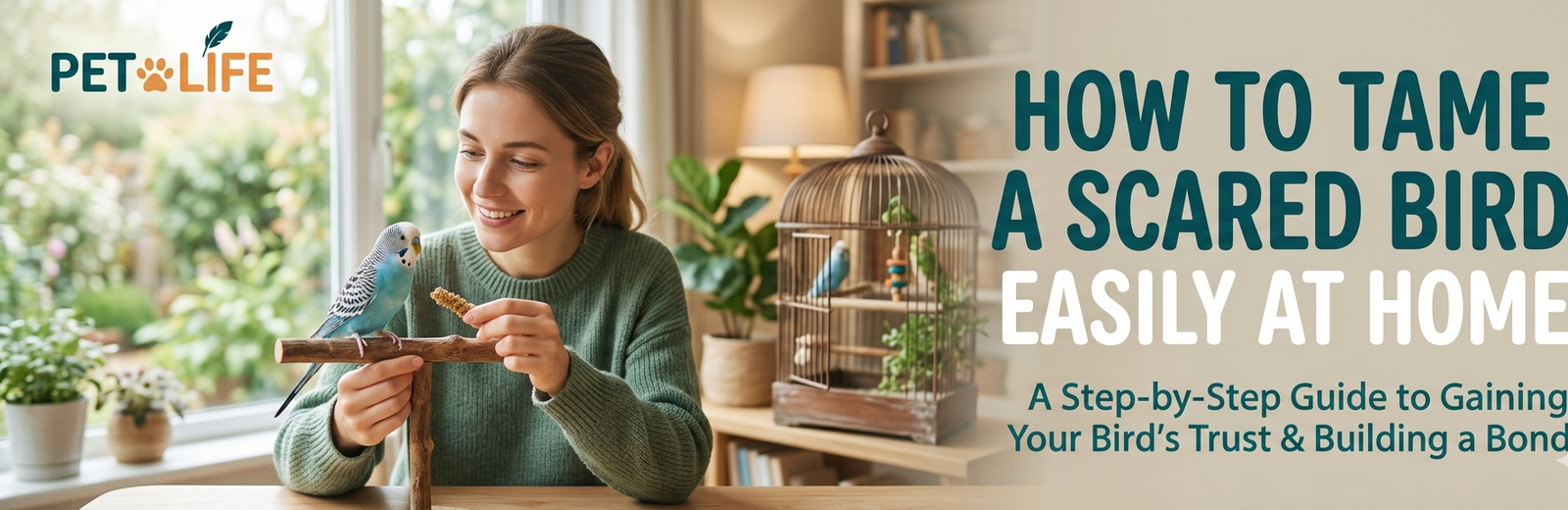
Bringing a new bird home is an exciting milestone, but it can be disheartening when your feathered friend retreats to the back of the cage the moment you approach. Whether it’s a rescue with a rough past or a shy fledgling, patience is your greatest tool. At Pet Life, we believe every bird has the potential to be a social companion.
Here is your step-by-step guide on how to tame a scared bird easily at home without causing unnecessary stress.
1. Create a “Safe Zone” Sanctuary
Before you attempt to handle your bird, ensure their environment feels secure.
- Placement: Keep the cage at eye level. If it’s too low, they feel vulnerable; if it’s too high, they may feel dominant.
- Quiet Atmosphere: Minimize loud noises and sudden movements in the room during the first week.
2. The Power of “Passive Bonding”
The easiest way to start taming is by doing nothing at all. Sit near the cage and read a book, scroll through your phone, or talk softly to them. This teaches the bird that your presence is non-threatening.
Pet Life Tip: Avoid direct eye contact initially. In the wild, a steady stare is the mark of a predator. Use “soft eyes” or blink frequently to signal you are a friend.
3. The “Treat Bridge” Technique
Food is the fastest way to a bird’s heart. Identify their favorite treat (usually millet or sunflower seeds) and use it to bridge the gap.
- Offer through bars: Hold a long spray of millet through the cage bars.
- Wait for them: Let the bird come to you. Never chase them around the cage with your hand.
- Open door policy: Once they eat comfortably through the bars, try offering the treat from your hand just inside the open cage door.
4. The “Step-Up” Milestone
Once your bird eats from your hand without hesitation, you can introduce the “Step-Up” command.
- Place your index finger (or a perch, if they are particularly nippy) against their lower chest, just above their legs.
- Apply very gentle pressure and say “Step up.”
- Reward them immediately with a treat when they comply.
Taming Do’s and Don’ts
| Feature | What to Do | What to Avoid |
|---|---|---|
| Pace | Go at the bird’s speed. | Forcing interaction. |
| Hands | Keep movements slow and low. | Grabbing or “towering” over them. |
| Duration | Short, 5-10 minute sessions. | Exhausting the bird with long drills. |
| Consistency | Practice daily at the same time. | Random, infrequent training. |
Export to Sheets
Patience is the Secret Ingredient
Taming a bird isn’t an overnight process. Some birds come around in a few days, while others may take months. If your bird lunges or retreats, simply take a step back and try again later.
At Pet Life, we know that the strongest bonds are built on trust, not force. By following these steps, you’ll transform those fearful flutters into confident chirps and a lifelong friendship.